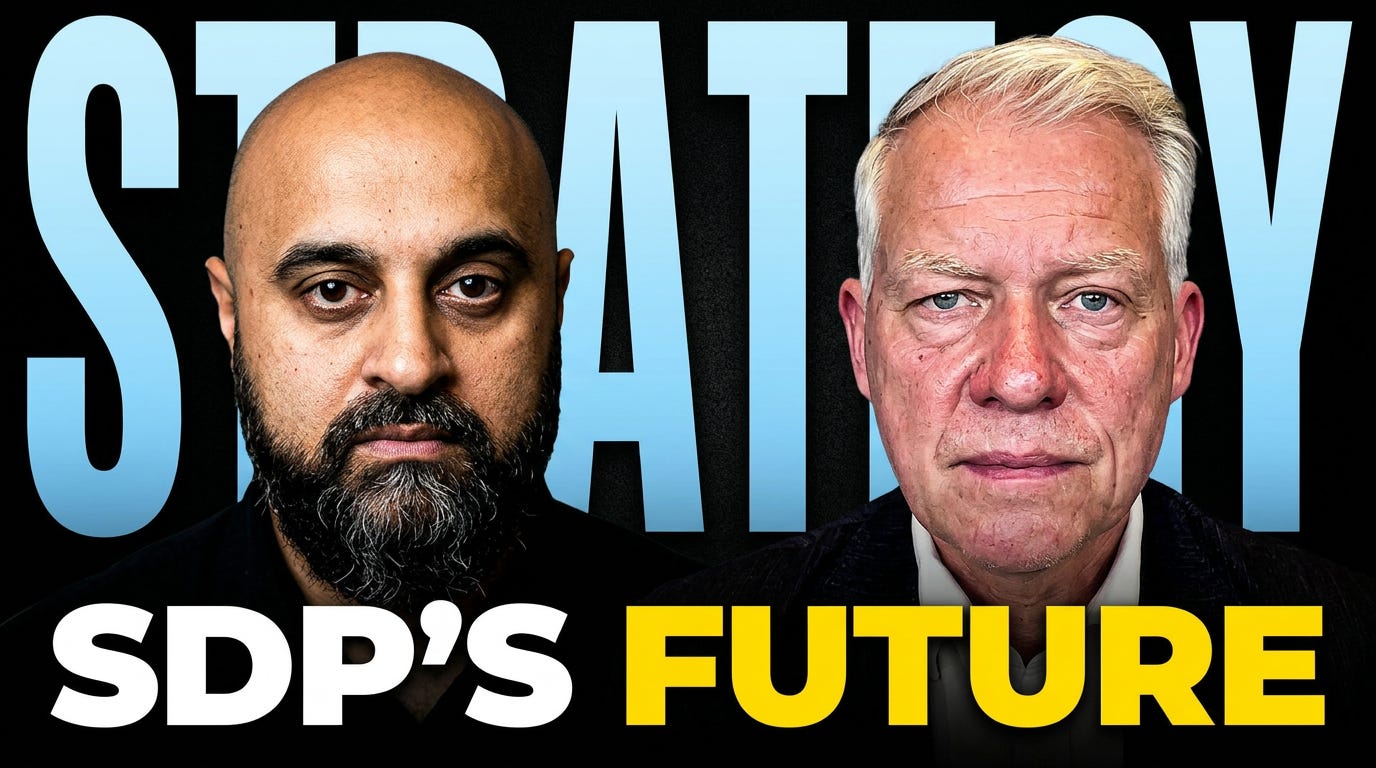
In this latest episode, we dive deep into the recent local elections and what they mean for the SDP. With strong candidates and a clear vision, it’s more than just survival; it’s about growth and making an impact.
But here’s the real question: how do we attract those crucial voices to join us? It’s all about resources and the right messaging. We’ve got the ideas, now we need the reach!
William Clouston is the leader of the Social Democratic Party, known for its commitment to sensible policies and social conservatism. His leadership has been pivotal in guiding the party through challenging times, and his insights offer valuable perspectives for understanding the current political landscape.
One of the interesting highlight of the conversation was when we talked about the need to attract new members with Blue Labour tendencies, and not just members but active members within the party. As SDP is a socially conservative party with left leaning economics, although a mixed economy style, Blue Labour is what defines it the best as a shorthand:
The SDP participated in recent local elections with a focus on maintaining its presence in key areas. Clouston shared that the party had about 15 candidates across the country, most being first-time contenders. Their primary goal was to retain their stronghold in Leeds, where Wayne Dixon was re-elected in Middleton Park. Clouston’s confidence stemmed from the party’s grassroots efforts and the importance of connecting with local voters.
One significant challenge faced by the SDP was the emergence of Reform Party that had not contested elections previously. Clouston noted that the competition was tough, especially against reform candidates who garnered substantial support. Despite this, the SDP managed to secure over 2000 votes, which Clouston deemed a success given the circumstances. He highlighted the overwhelming wave of reform support observed during the elections, prompting a reassessment of strategies.
One of our major point of disagreement was with people like Kemi Badenoch being involved in representative politics when her connection to the country is loose and quite frankly based on Blairite globalist project. As I have said before, no problem with her as a person, but you shouldn’t be able to just get into politics when you do not have a solid claim of belonging. We need to at least insert an old sociology assertion of a 3 generation rule, “immigrant families fully integrate into the dominant culture by the third generation”, and that is when they don’t live in parallel communities within a country. And to be honest, these days London is a parallel community and not representative of England.
In doing so, I exclude someone like myself from ever participating in representative politics. Am I right with this argument? I don’t know. Are there people who would want me involved as a elected member, on local or national level, I don’t know. I just don’t think it is right. And by allowing me, or being motivated by self interest, would I be opening up the door to bad faith actors? I most certainly think so.
This highlight clip below is from the segment of that argument, where we also discuss the importance and need for the revival of Tories for British politics. Or rather the revival of traditional conservatism regardless of what form it is delivered in.
And lastly, one of the most important points we discuss was bringing back the concept of fairness and one rule for all. With all the human rights and DEI initiatives, British laws have become unfair to the Brits. This cannot go on:
A key takeaway from Clouston’s insights is the urgent need for better resources within the party. He explained that while the SDP has capable individuals producing quality content, the party struggles with media presence and public recognition. Clouston advocated for a professionalized media team to push their message more effectively to the mainstream electorate.
Looking ahead, Clouston expressed optimism but also caution. He emphasized that the next 12 months are crucial for the SDP’s growth. To transition from a small party to a recognized national entity, the SDP needs to aim for hundreds of thousands of votes in future elections. Clouston believes the party possesses strong policies but lacks the necessary resources to amplify its message effectively.
The SDP’s journey through local elections offers critical insights into the dynamics of political competition and the need for robust communication strategies. As Clouston highlighted, maintaining momentum and attracting new supporters will be vital for the SDP’s future success. To learn more about the SDP and its initiatives, consider following their developments closely.
Thank you for reading and listening to the episode. If you wish to support my work further please consider becoming a paid subscriber. Your support is well appreciated.